Cross-platform mobile app frameworks 2024 introduces the latest trends and advancements in app development, offering a detailed analysis of key frameworks and their benefits. Dive into the world of mobile app development with this informative guide.
Explore the significance of cross-platform frameworks, compare top options, and discover the advantages they bring to mobile app development in 2024.
Cross-platform mobile app frameworks 2024
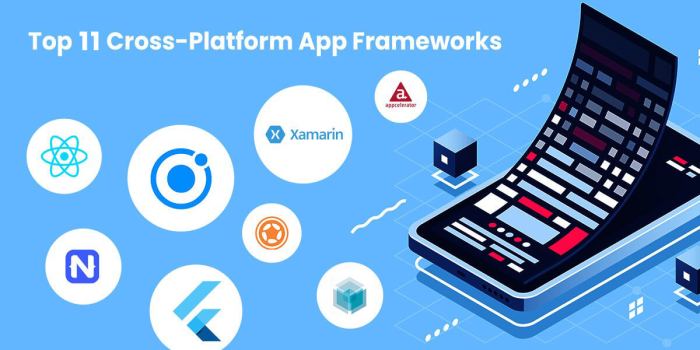
Cross-platform mobile app frameworks play a crucial role in 2024 as they allow developers to create mobile applications that can run on multiple operating systems using a single codebase. This significantly reduces development time and costs while ensuring consistency across different platforms.
Top Cross-platform Frameworks in 2024
- Flutter: Known for its fast performance and hot reload feature, Flutter by Google is a popular choice for building beautiful native apps for iOS and Android.
- React Native: Developed by Facebook, React Native continues to be a strong contender with a large community and support for third-party plugins.
- Xamarin: Owned by Microsoft, Xamarin offers seamless integration with Visual Studio and allows developers to build native apps using C# for iOS, Android, and Windows.
Key Features and Advantages of Using Cross-platform Frameworks in 2024
- Code Reusability: Developers can write once and deploy across multiple platforms, saving time and effort.
- Cost-effective: With a single codebase, businesses can save on development costs and resources.
- Efficiency: Cross-platform frameworks streamline the development process and enable faster time-to-market for mobile apps.
- Native Performance: Modern frameworks like Flutter and React Native offer near-native performance, providing a seamless user experience.
- Community Support: Popular frameworks have large and active communities, offering resources, tutorials, and plugins to support developers.
Mobile computing
Mobile computing has come a long way since its inception, with advancements in technology shaping the way we interact with our devices on the go. From the early days of basic mobile phones to the current era of smartphones and tablets, the evolution of mobile computing technologies has been rapid and transformative.
Evolution of Mobile Computing Technologies
- First Generation (1G): Introduced in the 1980s, 1G technology enabled basic voice calls through analog signals.
- Second Generation (2G): The 2G era brought digital voice calls and the introduction of SMS messaging.
- Third Generation (3G): With 3G, mobile data became more mainstream, allowing for faster internet browsing and multimedia applications.
- Fourth Generation (4G): 4G technology revolutionized mobile connectivity, offering even faster internet speeds and enabling the rise of video streaming and online gaming on mobile devices.
- Fifth Generation (5G): The current era of 5G technology promises ultra-fast speeds, low latency, and the ability to connect a massive number of devices simultaneously.
Latest Trends in Mobile Computing for 2024
- Augmented Reality (AR) and Virtual Reality (VR) integration in mobile apps for immersive user experiences.
- Artificial Intelligence (AI) and Machine Learning (ML) integration for personalized and predictive app functionalities.
- Internet of Things (IoT) integration to enable seamless connectivity between smart devices and mobile applications.
- Enhanced Mobile Security measures to protect user data and privacy in an increasingly connected world.
Impact of Mobile Computing on Modern Society and Business Practices
- Increased Connectivity: Mobile computing has made it easier for people to stay connected with each other, regardless of geographical boundaries.
- Enhanced Productivity: Mobile apps have transformed the way businesses operate, allowing for remote work, real-time collaboration, and efficient task management.
- Consumer Behavior Shift: The convenience of mobile apps has altered consumer behavior, with more people opting for online shopping, mobile payments, and on-demand services.
- Data-driven Insights: Mobile computing has enabled businesses to gather valuable data about consumer preferences and behaviors, leading to more targeted marketing strategies and product offerings.
Software development
Software development plays a crucial role in the mobile app industry, as it involves creating, designing, and maintaining mobile applications that cater to the needs and preferences of users. With the rapid advancements in technology, software development methodologies and tools have evolved to meet the increasing demands for innovative and user-friendly mobile apps.
Latest Methodologies and Tools in Mobile App Development
- Agile Development: Agile methodologies like Scrum and Kanban are commonly used in mobile app development to ensure quick iterations, adaptability to changes, and continuous improvement.
- DevOps: DevOps practices help streamline the development, testing, and deployment processes, allowing for faster delivery of high-quality mobile apps.
- Cross-Platform Frameworks: Tools like React Native, Flutter, and Xamarin enable developers to build mobile apps that can run on multiple platforms, saving time and resources.
- Cloud-Based Development: Cloud services provide scalability, storage, and collaboration capabilities, making it easier for developers to build and deploy mobile apps efficiently.
Successful Mobile App Projects Using Innovative Software Development Techniques
- Instagram: Instagram’s mobile app was developed using agile methodologies, allowing for continuous updates and improvements to meet user demands for new features and functionalities.
- Uber: Uber’s mobile app leverages the power of cloud-based development to handle millions of real-time transactions, ensuring a seamless experience for users and drivers.
- WhatsApp: WhatsApp’s mobile app is built using cross-platform frameworks like React Native, enabling it to run smoothly on both iOS and Android devices while maintaining a consistent user experience.
Computer hardware
Mobile app performance is heavily influenced by the hardware components of the devices on which they run. The advancements in mobile hardware technology for 2024 have a significant impact on the capabilities of mobile apps and the frameworks used to develop them.
Developers must consider the hardware capabilities of different devices when choosing a cross-platform mobile app framework to ensure optimal performance and compatibility.
Key components of mobile devices and their role in app performance, Cross-platform mobile app frameworks 2024
- Processor: The processor, or CPU, of a mobile device plays a crucial role in executing app instructions and processing data efficiently. Faster processors result in smoother app performance and faster response times.
- RAM: Random Access Memory (RAM) affects the device’s ability to multitask and run multiple apps simultaneously. Higher RAM capacity allows for better performance, especially for memory-intensive apps.
- Storage: The storage capacity of a device impacts the app’s ability to store data locally. Insufficient storage can lead to performance issues, especially with apps that require frequent data access.
- Battery: The battery life of a device affects how long users can interact with an app before needing to recharge. Energy-efficient hardware components contribute to longer battery life and better user experience.
Advancements in mobile hardware technology for 2024
- 5G Connectivity: The widespread adoption of 5G technology enables faster data speeds and lower latency, enhancing the performance of mobile apps that rely on real-time data processing.
- AI Integration: Mobile devices with built-in artificial intelligence capabilities can optimize app performance by predicting user behavior, enhancing security, and improving overall user experience.
- Foldable Displays: The introduction of foldable displays in mobile devices offers new possibilities for app developers to create innovative user interfaces and experiences.
- Enhanced Camera Systems: Improved camera technology in mobile devices opens up new opportunities for augmented reality (AR) and virtual reality (VR) apps, enriching the app ecosystem with immersive experiences.
Mobile hardware capabilities influence the choice of app frameworks
- Performance Optimization: Developers consider the hardware capabilities of target devices when selecting a cross-platform mobile app framework to ensure optimal performance across different platforms.
- Feature Compatibility: Hardware-specific features, such as biometric authentication or NFC capabilities, may influence the choice of app framework to leverage these functionalities effectively.
- Resource Management: Efficient utilization of hardware resources, such as CPU, RAM, and storage, is crucial in selecting an app framework that can maximize performance while minimizing resource consumption.
- User Experience: The seamless integration of hardware capabilities into the app experience can enhance user satisfaction and engagement, making it essential to choose a framework that supports these features effectively.
Final Review
In conclusion, Cross-platform mobile app frameworks 2024 provide developers with versatile solutions for creating innovative mobile applications. Stay ahead of the curve by leveraging the power of cross-platform frameworks in your app development projects.
FAQs
What are the key features of cross-platform mobile app frameworks in 2024?
Some key features include ease of development, cost-effectiveness, and the ability to reach a wider audience with a single codebase.
How do cross-platform frameworks impact mobile app performance?
Cross-platform frameworks can influence app performance by optimizing code for different devices and operating systems, leading to efficient and consistent user experiences.
Which cross-platform framework is gaining popularity in 2024?
Flutter, with its rich set of features and growing community support, is emerging as a popular choice among developers for cross-platform app development in 2024.